
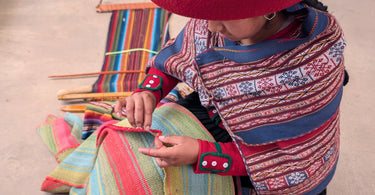
Artesanía andina y sostenibilidad: una práctica anterior al discurso
Introducción
Mucho antes de que la sostenibilidad se convirtiera en un término habitual, en los Andes ya existía una forma consciente de crear. No como una tendencia, sino como una necesidad y una expresión de respeto.
La artesanía andina sostenible no surge de una estrategia medioambiental, sino de una relación profunda con la tierra, sus recursos y la comunidad. Cada decisión —qué material utilizar, cuánto producir o cuándo trabajar— responde a un equilibrio aprendido y transmitido a lo largo del tiempo.
En Lo Mio, comprender esta realidad resulta esencial para trabajar con la artesanía de una manera responsable, respetuosa y coherente con su origen.
Crear sin excesos
En las comunidades andinas, los tejidos no se producen en grandes cantidades ni se acumulan sin un propósito. Cada pieza se elabora de acuerdo con el tiempo disponible, los materiales que proporciona el entorno y las necesidades reales.
La lana se utiliza cuidadosamente, los procesos se adaptan a los ciclos naturales y el trabajo artesanal se integra en la vida cotidiana. No existe sobreproducción, porque cada pieza requiere tiempo, atención y esfuerzo manual.
Esta forma pausada y mesurada de crear constituye, por sí misma, una práctica sostenible.
Materiales vinculados a la tierra
Los textiles andinos nacen de materiales de origen natural, trabajados mediante métodos tradicionales. La lana, los tintes y las técnicas artesanales están estrechamente vinculados al entorno y a conocimientos transmitidos de generación en generación.
El uso consciente de estos recursos no responde a certificaciones ni a etiquetas externas, sino a una lógica cultural: tomar únicamente lo necesario y respetar la tierra que lo proporciona.
Esta relación directa con los materiales favorece la durabilidad de cada pieza y aumenta su valor a largo plazo.
Comunidad, reciprocidad y trabajo compartido
La sostenibilidad en el mundo andino no se limita al impacto medioambiental. También está profundamente relacionada con su dimensión social.
El principio del ayni, basado en la reciprocidad, estructura la vida comunitaria y forma parte de los procesos artesanales. El trabajo se construye mediante la colaboración, el aprendizaje compartido y el reconocimiento mutuo.
Cada tejido andino es el resultado de una red de conocimientos y relaciones. Su valor no reside únicamente en el objeto final, sino también en las personas y los vínculos que hacen posible su creación.
Conclusión
Hablar de sostenibilidad en la artesanía andina significa hablar de coherencia: de procesos que respetan a las personas, los materiales y el tiempo necesario para hacer bien las cosas.
Cuando una pieza artesanal llega a un hogar, no representa una tendencia pasajera. Representa una manera diferente —y profundamente válida— de crear y consumir.
Una forma de comprender que lo sostenible no siempre necesita inventarse: a veces, simplemente se hereda.